Our Structural Drying Process
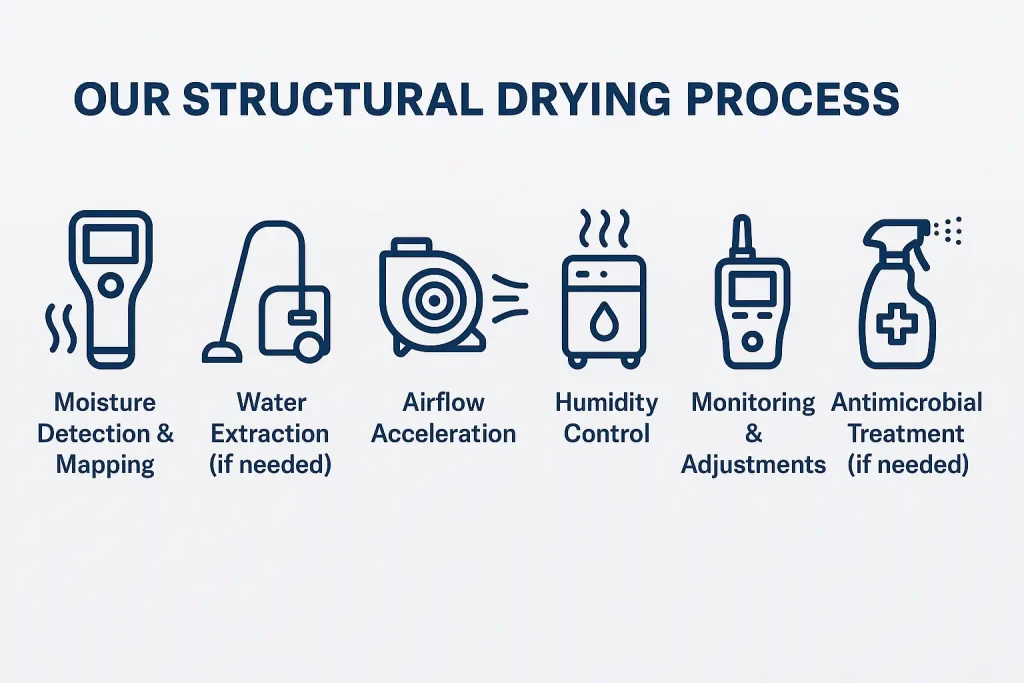
1. Moisture Detection & Mapping
We begin with advanced moisture meters and thermal imaging to identify hidden water inside walls, floors, and ceilings. This prevents long-term structural weakening and potential mold growth. If widespread damage is found, we often recommend water damage restoration in Rochester NY as a related service.
2. Water Extraction (if needed)
If standing water remains from floods, leaks, or burst pipes, our truck-mounted extractors quickly remove it before drying begins. This step works alongside our water extraction services in Rochester NY to prepare the structure for controlled drying.
3. Airflow Acceleration
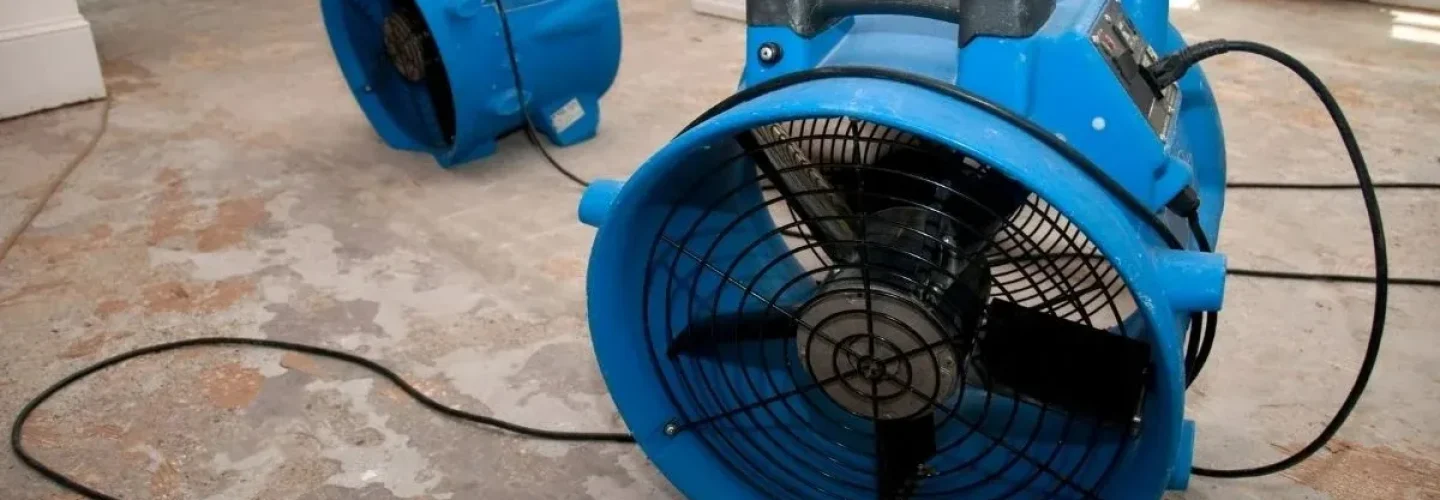
Industrial air movers are positioned to push dry air across damp surfaces, speeding up evaporation. This prevents building materials from staying wet too long and reduces the risk of further issues that may require flood cleanup in Rochester NY.
4. Humidity Control
High-capacity dehumidifiers pull moisture from the air and surrounding materials, keeping humidity levels low and stable. Maintaining this balance is essential for preventing microbial growth. For properties with heavy moisture, we often recommend our dehumidifying services in Rochester NY.
5. Monitoring & Adjustments
Our team checks progress daily using moisture meters and thermal cameras. Equipment is repositioned or adjusted to ensure every area dries evenly. This close monitoring helps prevent future mold issues that might otherwise require mold remediation in Rochester NY.
6. Antimicrobial Treatment (if needed)
When water exposure has been prolonged, we apply antimicrobial treatments to prevent bacterial or mold growth. Combined with our odor elimination services in Rochester NY, this ensures your property is not only dry but also safe and comfortable to live in again.
Why Structural Drying Is Essential
After water damage, the real danger isn’t always what you see. Even if floors look dry, moisture can remain beneath the surface. Without proper drying:
- Mold can start growing in as little as 48 hours
- Wood framing can warp or rot over time
- Drywall can weaken and collapse
- Insulation can remain damp and lose effectiveness
- Air quality can suffer from trapped humidity
DIY fans or small dehumidifiers cannot reach deep into walls and subfloors. Professional equipment is required to ensure complete drying.
How Long Does Structural Drying Take?
Drying times vary depending on how much water was absorbed, the materials involved, and the size of the area. On average, structural drying in Rochester homes takes 3–5 days, but larger commercial buildings or severe water damage may require a week or more.
Residential & Commercial Structural Drying
We provide drying services for:
- Homes and apartments affected by leaks or flooding
- Commercial buildings, offices, and retail stores
- Basements and crawlspaces with excess moisture
- Healthcare facilities and schools where humidity control is critical
Every property type requires a slightly different drying plan, and our team tailors the approach to your space.
Insurance and Structural Drying
Most insurance policies cover structural drying if the water damage was caused by a sudden and accidental event, such as a burst pipe or storm. We provide the documentation your adjuster needs, including moisture readings, drying logs, and before-and-after reports.